
Precision Engineering & Quality Assurance Standards for Global Kitchenware Sourcing
Built for international retail programs and volume brand distributors of wholesale cutting boards, our quality control and kitchenware quality assurance protocols eliminate supply chain variance. CasaRasoi unifies certified virgin resin validation, automated mold tolerance monitoring, and rigorous pre-shipment container audits.
Upstream Material Verification: Incoming Raw Material Testing & Toxicology Safety
Regulatory compliance and culinary safety in high-volume kitchenware manufacturing begin long before resins reach the injection screw or metal sheets hit stamping tools. CasaRasoi enforces a rigorous upstream inspection program designed to eliminate hazardous stabilizers, non-compliant post-consumer scrap, and unverified industrial regrind from entering our production floor. Every inbound container undergoes technical receiving controls to protect the mechanical, chemical, and hygienic integrity of our wholesale cutting boards and finished kitchen goods.
We operate a mandatory incoming material inspection protocol across every shipment of virgin PP cutting board material, engineering polymers, bio-composites, and metallurgical alloys. Our food contact testing raw materials program systematically screens lot samples against United States FDA 21 CFR 177.1520 and European Union Regulation (EU) No 10/2011 specifications. By isolating lot variations and contaminants at the receiving bay, we safeguard overseas distributors against structural cracking, micro-leaching, and customs quarantine risks.
Traceable Feedstock Assurance from Certified Global Refineries
Culinary prep boards, commercial cutting blocks, and airtight food containers face harsh physical demands: repetitive chef knife impacts, heavy surface abrasion, caustic food-acid exposure, and high-heat commercial sanitization. CasaRasoi partners strictly with tier-one petrochemical refiners and certified stainless mills, subjecting every delivery to comprehensive Certificate of Analysis (COA) cross-examinations. If an inbound lot exhibits density drift or irregular melt crystallization, it is stopped before ever touching our tooling.
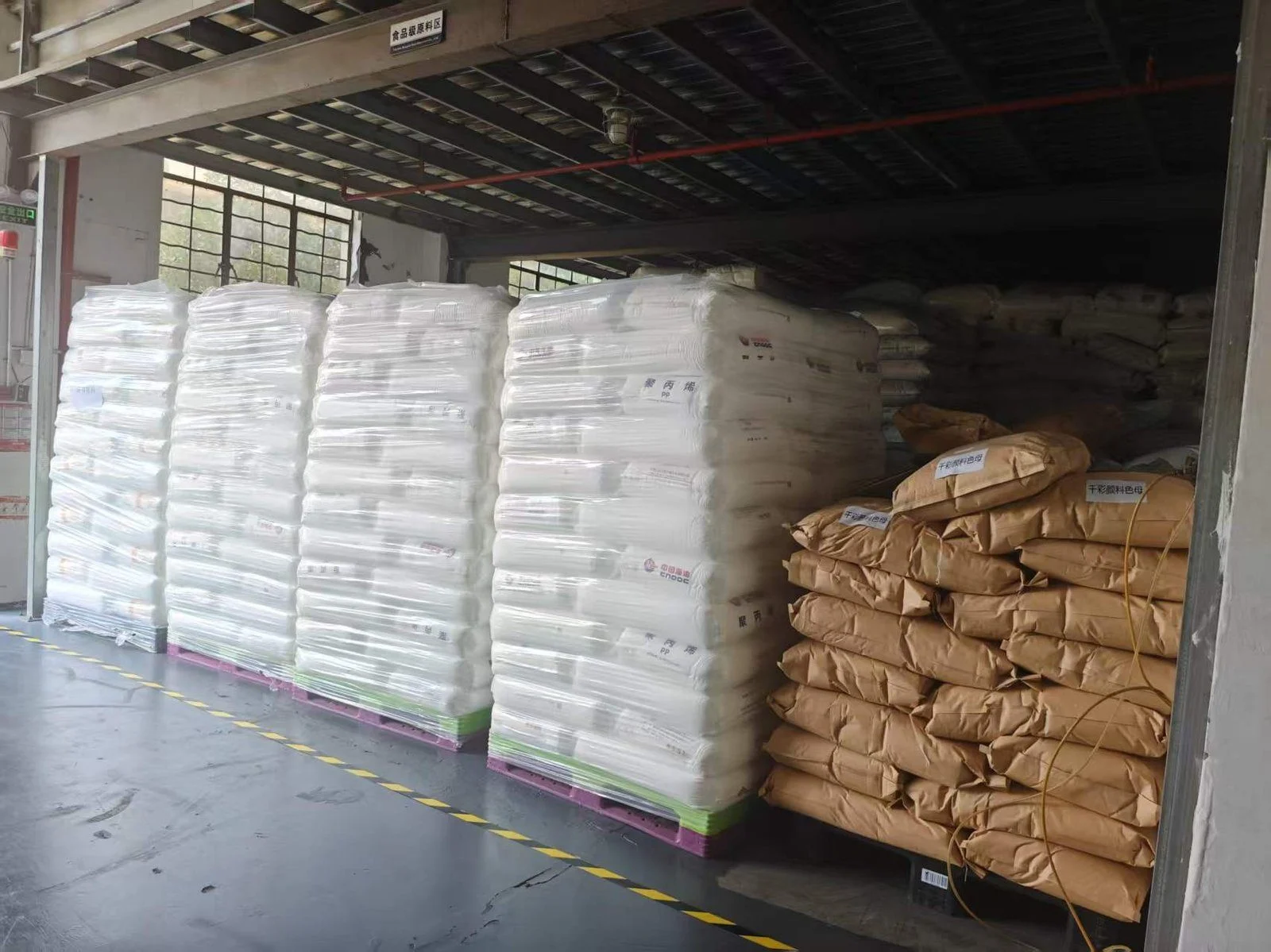
Virgin Polymers & Bio-Composites
Comprehensive testing regimes for virgin PP cutting board material, food-grade HDPE, co-molded TPEs, and natural agricultural wheat-straw composite blends.
Melt flow index stability, internal moisture content (≤0.05%), raw polymer density, and chemical screening for BPA, BPS, and phthalates.
Fourier-Transform Infrared (FTIR) Spectrometer, automated extrusion melt indexer, differential scanning calorimeter.
±5% MFI variance from registered master lot; zero detectable orthophthalates under a 0.01% w/w detection limit.
Metallurgical Testing for Stainless Steel
Alloy composition verification and surface passivation testing for SUS 304 food-grade stainless steel coils, utility handles, and hybrid board cores.
Elemental alloy verification (Chromium ≥18.0%, Nickel ≥8.0%), passivation layer continuity, tensile ductility, and micro-hardness.
Direct-reading optical emission spectrometer (OES), cyclic salt spray fog chamber (ASTM B117), digital Rockwell tester.
Zero surface rust, pinhole pitting, or discoloration after 96 hours of continuous 5% neutral salt spray at 35°C.
Masterbatch & Thermal Additives
Analytical evaluation of color masterbatches, UV processing stabilizers, and processing aids for high thermal endurance, colorfastness, and low volatility.
Thermal color stability during molding, primary aromatic amine (PAA) release, sensory off-gas odor, and toxic heavy-metal carrier content.
Gas Chromatography-Mass Spectrometry (GC-MS), benchtop spectrophotometer, forced-air thermal degradation chamber.
Zero pigment extraction in 3% acetic acid simulant at 100°C; 100% compliance with EU REACH SVHC and RoHS restrictor lists.
Incoming Quality Control Parameter & Analytical Testing Matrix
Standard operational protocols applied to every delivery of raw polymers, masterbatches, and metal alloys before inventory release.
| Raw Material Classification | Mandatory Lab Inspection Standard | Analytical Target | Acceptance Threshold |
|---|---|---|---|
| Virgin Polypropylene (PP) Homopolymer | ASTM D1238 / ISO 1133 | Melt Mass-Flow Rate (MFR) | Within ±0.8 g/10min of technical spec |
| Food-Contact Wheat Straw Resin Blend | EN 1186 / EN 13130 | Overall Substance Migration | < 10 mg/dm² (Aqueous & Acidic food simulants) |
| Thermoplastic Elastomer (TPE) Overmold | ASTM D2240 | Shore Hardness Durometer | Shore A 65 ± 3 points |
| SUS 304 Stainless Steel Coils | ASTM A240 / ASTM B117 | Cr/Ni Purity & Salt Corrosion | 0 red rust after 96h neutral salt fog |
| Colorant & Additive Masterbatch | LFGB § 30 & 31 / FDA 178.3297 | Color Fastness & PAA Release | PAA < 0.002 mg/kg detection limit |
Lot Isolation Guarantee: Any material batch that fails spectroscopic or rheological criteria is immediately cordoned in our barcode-controlled quarantine bay, with formal vendor rejection and corrective action notices dispatched within 24 hours.
In-Process Quality Control (IPQC): Mold Calibration, Cycle Tolerances, and Defect Isolation
Engineering consistency in cutting board manufacturing demands dynamic, closed-loop oversight at every injection press and automated cell. At the CasaRasoi manufacturing plant in Taizhou, in-process quality control (IPQC) bridges initial material preparation and downstream assembly audits. Operating high-tonnage multi-cavity machines, precision hot-runner molds, and secondary dual-shot overmolding stations for intricate custom shaped cutting boards, our engineering specialists verify thermodynamic balance, dimensional profiles, and mechanical cycle repeatability around the clock.
Tool cavity wear, heat distribution variances, and resin melt viscosity fluctuations can lead to subtle planar distortion, wall thickness drift, and interfacial adhesion loss. Our rigorous four-tier IPQC architecture unites automated sensors with routine line-side metrology bench inspections, flagging dimensional anomalies long before finished lots accumulate. This disciplined regimen maintains micro-millimeter injection molding tolerance standards across tens of thousands of wholesale cutting boards manufactured daily.
Closed-Loop Surveillance Across the Cutting Board Manufacturing Process
High-volume production of food-grade custom plastic cutting boards depends on stable hydraulic pack pressure, controlled melt residence times, and calibrated tool chilling. CasaRasoi integrates digital process transducers across all automated production cells. When cavity pressures diverge or thermal cooling circuits drift outside tightly budgeted processing windows, automated interlocks alert technicians immediately to prevent out-of-spec output.
- 1 Multi-Zone Conformal Thermal Control: Multi-circuit mold temperature controllers maintain core-to-cavity differentials within ±1.0°C, suppressing anisotropic shrinkage and preventing warpage on broad cutting surfaces.
- 2 Piezoelectric Cavity Pressure Profiling: In-mold sensors record the holding curve on every machine cycle to ensure optimal polymer packing density, preventing internal sink voids and micro-porosity.
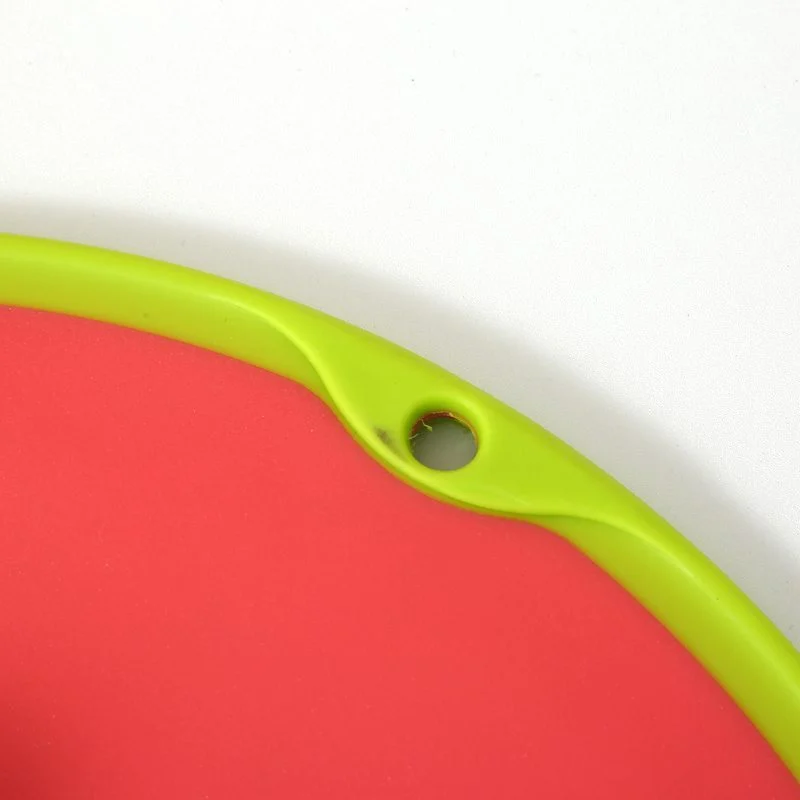
- 3 Dual-Shot Molecular Fusion Verification: Two-stage robotic injection ensures high-strength interfacial bonding between rigid food-grade polyolefin cores and slip-resistant thermoplastic elastomer perimeter rims.
Interactive IPQC Production Timeline & Engineering Tolerance Matrix
Review the sequential verification checkpoints implemented throughout active production runs. Select any production phase below to review baseline engineering thresholds, inspection equipment, and defect remediation routines.
Stage 1: First Article Inspection (FAI) Pre-Run Calibration
Conducted immediately following mold warm-up and clamping balance alignment before releasing the machine for high-speed runs.
| Checkpoint Parameter | Verification Instrument | Engineering Tolerance | Remediation Protocol |
|---|---|---|---|
| Base Wall Thickness Uniformity | Multi-Point Ultrasonic Gauge | ±0.20 mm Nominal | Fine-tune screw cushion position and multi-stage holding pressure |
| Planar Flatness (Diagonal Runout) | Grade-00 Granite Plate & Dial Indicator | ≤ 1.20 mm/m Max Deviation | Adjust mold cooling manifold flow rates and cooling cycle timers |
| Total Structural Part Mass | Calibrated High-Precision Analytical Balance | ± 0.75% Target Spec | Recalibrate plasticizing dosage and transfer position on controller |
| Sub-Gate Vestige & Degating Flushness | High-Precision Digital Depth Caliper | ≤ 0.25 mm Above Surface | Sharpen pneumatic degating blades and realign robotic end-of-arm tool |
Automated SPC Data Capture
Every injection cycle transmits critical data points—melt pressures, barrel temperatures, and clamp forces—directly to our centralized SPC servers for comprehensive lot traceability.
Standardized Red-Bin Quarantine
Suspect and out-of-tolerance units are automatically segregated into tamper-evident red holding bins, accessible only by QA leads to eliminate any risk of line mix-ups.
On-Site Tooling Technicians
Dedicated mold engineers perform rapid parting face cleanups, slide servicing, and gate adjustments on-site, safeguarding uptime while maintaining strict dimensional tolerances.
Pre-Shipment Inspection: AQL Standards, Mechanical Stress, and Transit Testing
CasaRasoi enforces multi-layer pre-shipment inspection (PSI) protocols before any freight release. Every production lot across our wholesale cutting boards is verified through statistical sampling, multi-axis mechanical stress testing, and ISTA-certified export transit packaging validation to ensure zero-defect distribution across overseas retail channels.
ANSI/ASQ Z1.4 Acceptance Criteria
ISO 2859-1 Normal Single Level II Sampling Methodology
| Defect Category | AQL Standards | Sampling Plan | Rejection Parameters |
|---|---|---|---|
| Critical | 0.0 | 100% Visual & Safety Check | Cracks, micro-burrs, food-contact contamination, raw voids |
| Major | 1.0 | Level II Normal Single | Warping >1.0mm, dimension drift >0.5mm, TPE grip peeling |
| Minor | 2.5 | Level II Normal Single | Superficial scuffs, master carton creasing, retail sticker drift |
Randomized Multi-Pallet Pulls: Inspection specimens are pulled across top, center, and bottom pallet depths using true pseudorandom numbering to eliminate staging bias.
Pre-Shipment Inspection (PSI) Sign-Off: Export master cartons receive tamper-evident quality seal tags only after final mechanical stress checklists pass quality engineering review.
Full Batch Traceability: Every inspection dossier for our custom plastic cutting boards ties finished master packing lists directly to virgin resin lots and mold cavity numbers.
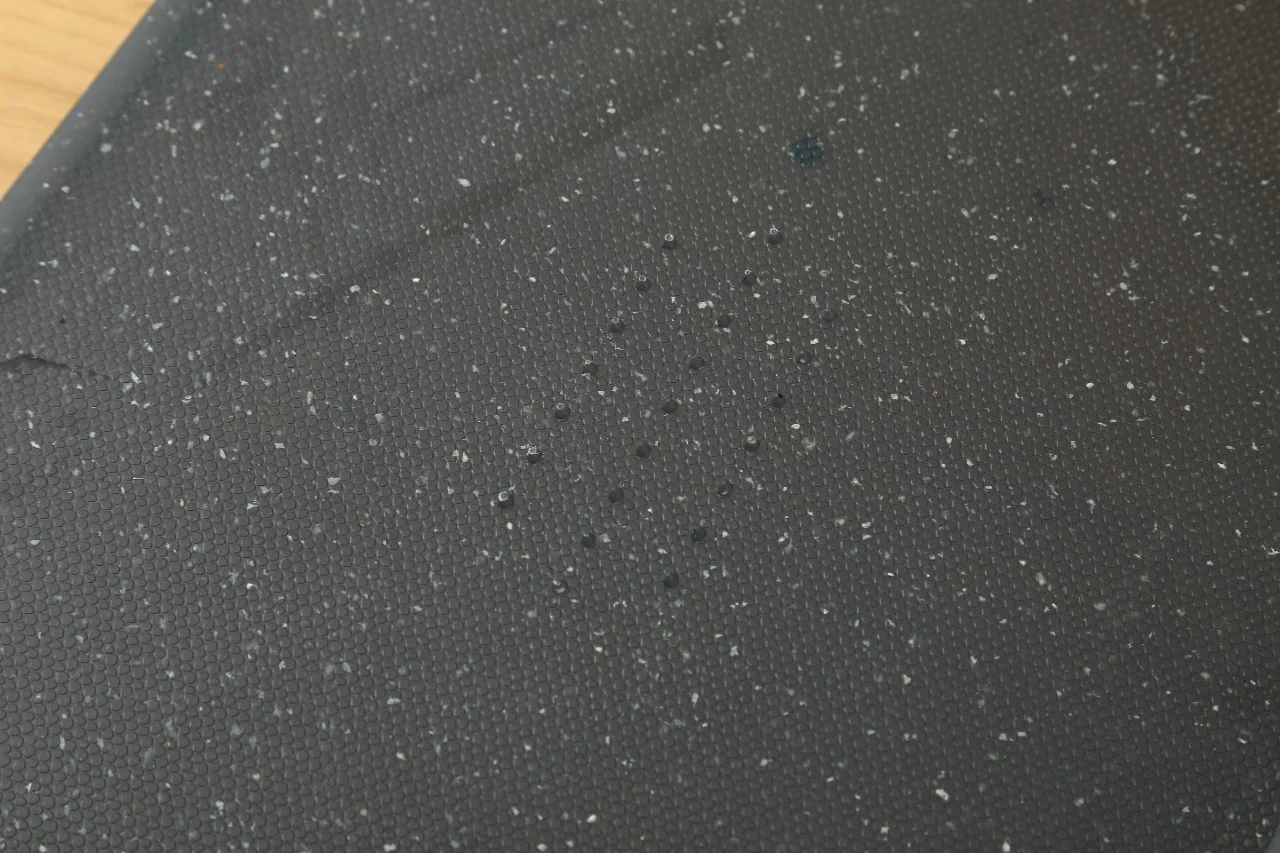
Knife-Scarring & Thermal Warpage Resistance
High-temperature commercial dishwasher thermal cycling at 85°C (185°F) wash-and-dry stages, matched with mechanical blade indentation to evaluate surface recovery.
Dynamic Anti-Slip & Impact Cleavage Testing
Simulated cleaver chopping shock via drop-weight impact fixtures alongside automated incline slip-angle verification on wet, soapy, and oil-slicked stainless prep surfaces.
Packaging Integrity & Drop Test Compliance
Full ISTA 1A drop test compliance for multi-tier carton packaging, edge crush test (ECT) verification, and optical ANSI/ISO grade verification for retail barcodes.
Maritime Moisture & Anti-Mold Barrier Seals
Sealed PE barrier liners, food-grade desiccants, and container moisture buffers safeguard goods against thermal dew point condensation during cross-ocean freight routing.
CasaRasoi Open-Door Policy for Global Inspection Agencies
We welcome your appointed inspection partners into our Taizhou factory before final bill of lading release for all manufactured cutting board products. Our engineering team provides dedicated inspection bays, calibrated metrology equipment, full testing logs, and complete lot accessibility to ensure smooth sign-offs.
Dedicated Quality Assurance Matrix: Category-Specific Testing Protocols
Manufacturing diversified kitchenware demands tailored validation routines across every substrate and assembly design. CasaRasoi implements full-range quality standards for wholesale cutting boards and specialized kitchen storage QA protocols across all 8 core product lines, maintaining strict international food contact compliance, mechanical durability, and strict dimensional stability. Review our operational matrices below to evaluate engineering tolerances, laboratory benchmarks, and pass-fail thresholds calibrated for tier-one global retail supply chains.
Division A: Material-Focused Cutting Surfaces
Engineered testing parameters for raw material purity, surface passivation, micro-roughness, and knife-contact resilience.
Stainless Steel Cutting Boards
SUS 304 Food GradeDesigned for commercial hygienic food prep, our custom stainless steel cutting board options eliminate microbial harboring while safeguarding culinary knife edges.
- · Metallurgical Grain Uniformity: Controlled brushed hairline texture calibrated within Ra 0.4–0.8 μm to stop micro-grooving.
- · Passivation Film Verification: Copper sulfate spot test to ensure an uninterrupted, acid-resistant chromium oxide boundary layer.
- · Perimeter Chamfering: Multi-station CNC deburring eliminating burrs and forming ergonomic, skin-safe edge profiles.
Faux Marble Plastic Boards
High-Density Virgin PPPairs premium natural stone aesthetics with high-impact, stain-resistant, non-porous polymer durability.
- · Non-Porous Stain Testing: 24-hour surface immersion in beet juice, curry extract, and red wine with zero color penetration.
- · Pigment Dispersion Uniformity: Homogeneous dual-barrel extrusion to prevent localized resin embrittlement or visual agglomerations.
- · Zero-Bleed Certification: High-temperature solvent migration screening validated against FDA 21 CFR 177.1520 requirements.
Non-Slip Cutting Boards
Co-Molded PP + TPEPrecision overmolding engineering that delivers dynamic surface grip across wet marble, stainless steel, and composite quartz countertops.
- · Interfacial Adhesion Check: ASTM D903 90-degree mechanical pull test verifying zero TPE delamination under heavy torque.
- · Wet Traction Coefficient: Dynamic coefficient of friction (COF > 0.65) verified under soapy water and vegetable oil conditions.
- · Dishwasher Thermal Stability: 120 consecutive 85°C high-heat sanitation wash runs with zero edge warping or rim peeling.
Colorful & Transparent Boards
Optical PolymersVibrant, hygienic color-coded cutting systems developed for cross-contamination prevention in high-volume food service.
- · Optical Clarity Measurement: ASTM D1003 haze meter testing to guarantee total luminous transmittance exceeds 92%.
- · UV Yellowing Resistance: Accelerated QUV chamber exposure verifying zero polymer discoloration after 300 continuous hours.
- · Chemical Degradation Defense: Contact testing with sodium hypochlorite and quaternary sanitizers with zero crazing or clouding.
Wheat Straw & Bio-Composite Cutting Boards
Bio-PP Composite MatrixSustainable kitchenware utilizing finely milled agricultural wheat straw fibers encapsulated inside virgin food-contact polypropylene.
- · Fiber Distribution Density: Optical cross-sectional microscopy confirming balanced natural fiber dispersion without binder voids.
- · Moisture Absorption Barrier: 48-hour continuous water submersion maintaining net moisture weight uptake below 0.18%.
- · Antimicrobial Activity: JIS Z 2801 surface exposure tests confirming > 99.9% bacterial inhibition against E. coli and S. aureus.
- · Thermal Odor Invariance: Zero organic release or fiber decomposition odors under heated dishwashing conditions up to 110°C.
Require Custom Testing Limits for Your OEM Private Label?
CasaRasoi accommodates buyer-specified quality parameters, including custom AQL thresholds, proprietary resin colorfastness standards, and specialized transit drop regimens. Our engineering team prepares bespoke Quality Inspection Sheets (QIS) and pre-production control plans prior to mold validation.
In-House Testing Laboratory Capabilities and Global Regulatory Validation
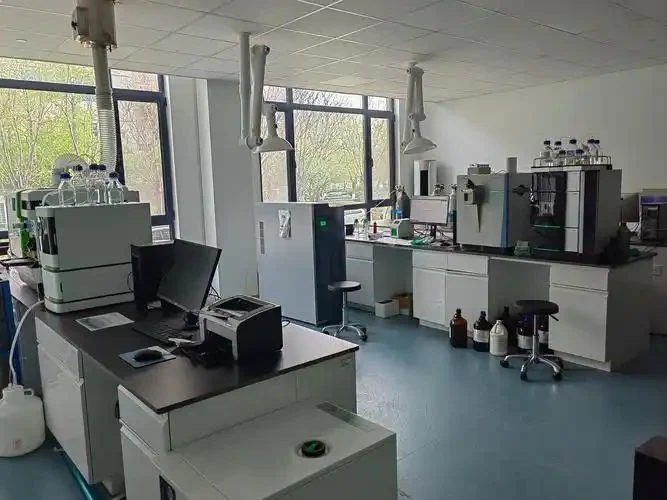
CasaRasoi operates certified in-house laboratory test equipment to deliver precise quantitative data, ensuring every OEM/ODM kitchenware run clears port inspections, statutory safety reviews, and demanding retail shelf standards worldwide.
Optical Video Measurement Systems
Automated non-contact video measurement systems verify dimensional parameters across our wholesale cutting boards, checking corner radii, perimeter juice-groove depths, container lid rims, and wall uniformity across high-cavity tooling runs.
In-House Spectrometric Analyzers
Optical emission and XRF spectrometers quantify nickel-chromium ratios in each custom stainless steel cutting board batch while screening polymers and masterbatches for heavy metals, phthalates, and restricted fillers.
Thermal Cycling & Humidity Chambers
Programmable climate chambers cycle boards, composite fibers, and storage seals across intense temperature fluctuations to simulate commercial dishwasher sanitization and freezer-to-microwave stability.
Compression & Cycling Fatigue Testers
Automated test stations measure heavy cleaver impact resilience, TPE overmold bonding peel strength, storage box stack compression limits, and tens of thousands of airtight latch actuations.
Certified Food-Contact Regulatory Conformity
CasaRasoi formulates materials and runs test batches under international regulatory standards, protecting retail clients against non-compliance penalties and import rejections.
Olefin polymer extraction testing confirming strict limits on soluble residues for direct food preparation contact.
Overall migration limit (OML) and specific migration limit (SML) verification across aqueous, acidic, and fatty food stimulants.
Rigorous organoleptic sensory assessments proving neutral flavor, zero odor transfer, and clean volatile organic compound profiles.
Targeted elemental migration testing for stainless steels and synthetic resins under prolonged organic acid exposure.
Independent Third-Party Certification on Demand
In addition to standardized internal testing records, CasaRasoi coordinates complete third-party product testing to validate your specific retail program requirements.
We provide full kitchenware compliance documents, including lot-specific declarations of conformity and analytical laboratory reports directly through SGS, TÜV Rheinland, and Intertek before your purchase order departs our Taizhou facility.
Frequently Asked Questions: B2B Sourcing, Inspections, and Tolerances
Direct answers regarding factory audits, custom tooling tolerances, third-party inspection access, and post-delivery batch remediation.
Quality Guarantee Framework
Every volume export run adheres to documented ISO 9001 practices, end-to-end lot traceability, and enforceable commercial warranties.
- SGS, Intertek & BV Audit Friendly
- End-to-End Lot Traceability Reports
- ANSI/ASQ Z1.4 Level II AQL Sampling
- Archived Golden Sample Retention
Custom Quality Protocols?
Consult our engineering desk to align customized AQL limits, specialized drop-test standards, or buyer-specific retail audit forms.
Request QA Compliance Dossier48h
Audit Notice Window
±0.2mm
Precision Assembly Tolerance
100%
Batch Traceability
T1
Golden Sample Sign-Off
Partner with a Verified Kitchenware Manufacturer
Ready to eliminate supply chain variance across our verified kitchenware products? Request our standardized wholesale cutting boards Quality Control SOP, review specs for custom plastic cutting boards, or schedule a comprehensive live virtual factory walkthrough.